



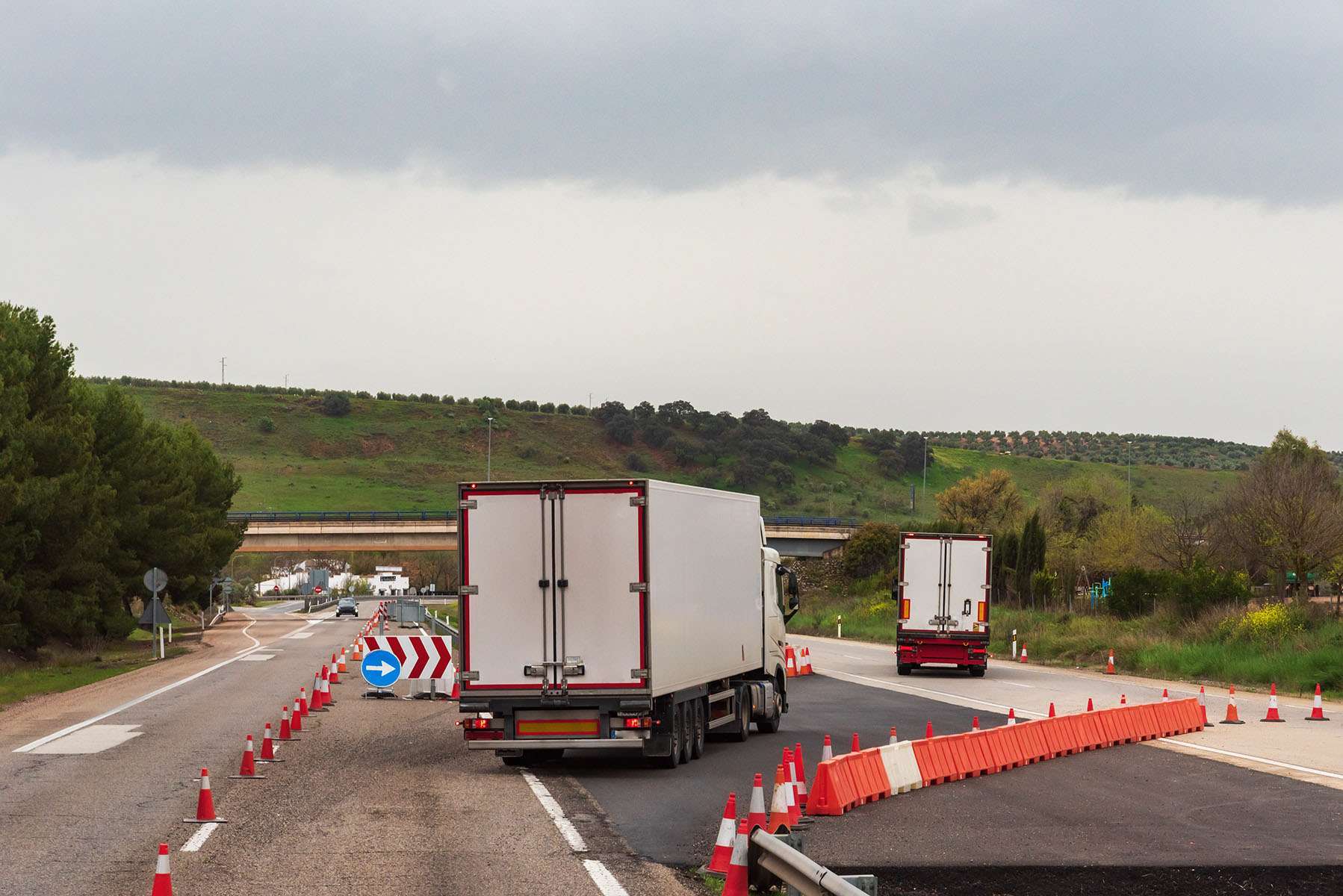
You see an orange “road work ahead” sign in the distance. The next actions you take can save a life.
Work zones can create dangerous driving conditions for commercial motor vehicle (CMV) drivers. Traffic patterns change, passenger vehicles scramble and narrow lanes leave no room for error. About 101,000 work zone crashes occurred in 2023, and more than 300 crashes involving a CMV led to a fatality, according to the National Work Zone Safety Information Clearinghouse.
National Work Zone Awareness Week
Each April, our industry recognizes National Work Zone Awareness Week, reminding drivers to slow down and stay alert. These work zone safety tips will keep you and others out of harm’s way.
Watch for signs.
Look for signs warning of work zones, flaggers or lane closures ahead. As soon as you see a “lane closed” sign, slowly start merging into the open lane when it’s safe. Always double-check your mirrors and blind spots before merging, and use your turn signals.
Slow down.
Speed limits in highway work zones are often 45-55 MPH, well below the normal limit. Fines for speeding are often doubled in construction zones, too. Drive at or below the limit to protect yourself, other drivers and road crews.
Double your space cushion.
Rearend crashes are the most common type of work zone accident. Leave twice the normal distance between your truck and the vehicle ahead so you have enough room to stop safely.
Be prepared for anything.
Watch for workers standing near travel lanes. Keep an eye on construction equipment that could enter the roadway. Expect sudden stops or unexpected lane changes. And always obey the directions of flaggers.
Keep your eyes on the road.
Avoid texting, eating, drinking, talking with passengers, or adjusting the radio or GPS in work zones.
Watch for mobile work zones.
Construction sites change often. Road work that closed the left lane last week may close the right lane this week. Road patching, line painting and mowing crews may also set up temporary work zones with less warning than larger construction projects.
Plan your route.
The best way to stay safe in work zones is to avoid them. Check the Federal Highway Administration’s National Traffic and Road Closure website before your trip to find construction areas on your route. If possible, map out alternate routes as a detour.