


For fleets, artificial intelligence (AI) is moving beyond experimentation into real-world use, with carriers of all sizes using the technology to improve routing, maintenance, fuel efficiency and utilization.
There is also a growing emphasis on operational AI tools that can sift through large volumes of data, identify patterns and help fleet managers determine what action to take next.
During ACT Expo 2026, the session “The Emerging AI Ecosystem: How Software Is Redefining Fleet Strategy" examined fleet-ready applications already in use to improve routing, maintenance, driver performance, uptime and efficiency.
Panelists, including Sherry Sanger, executive vice president of strategy and marketing at Penske Transportation Solutions, said fleets don’t need to simply add AI tools; instead, they should identify the business objectives that matter most and determine where AI can support or accelerate existing strengths.
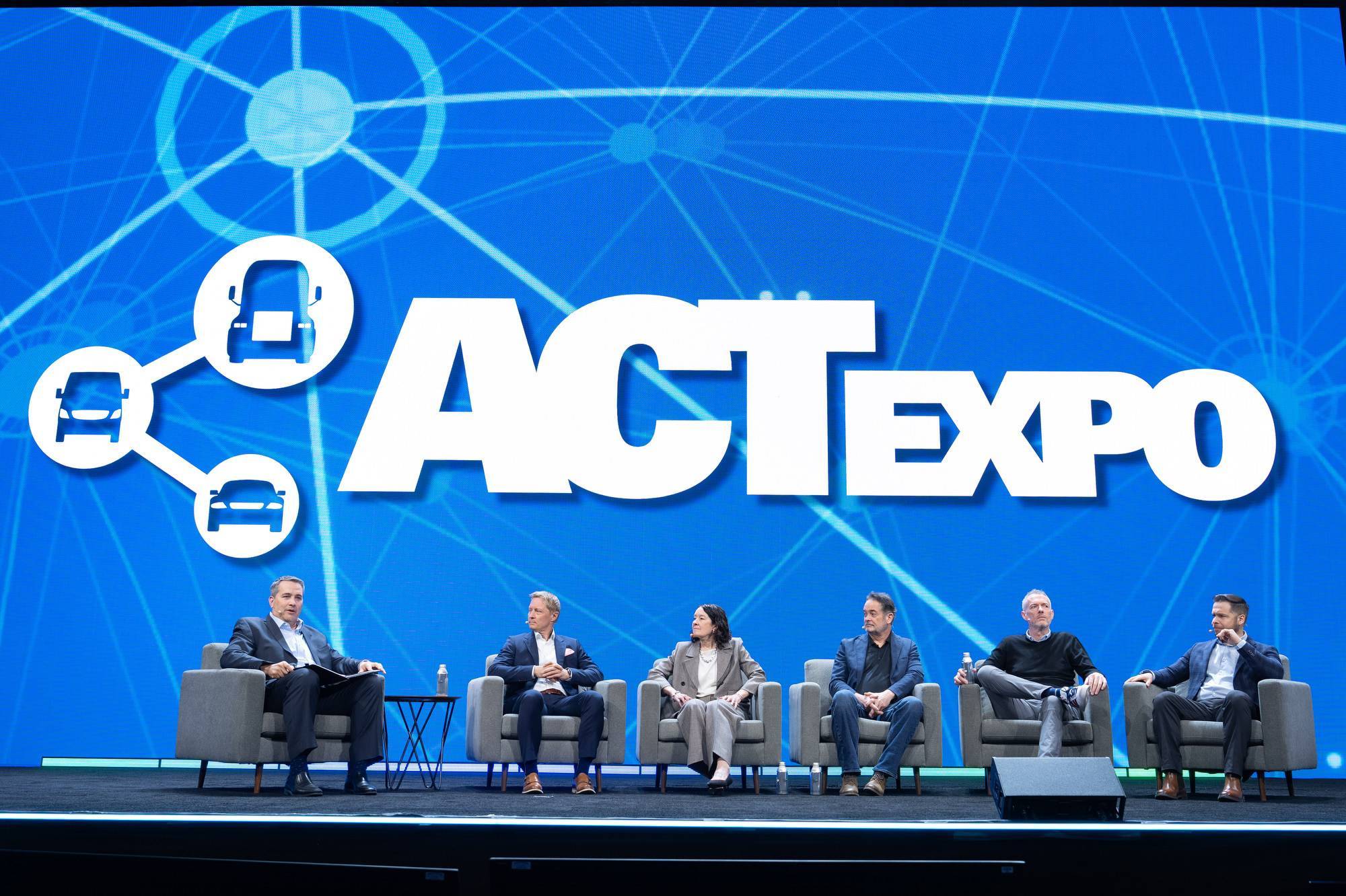 ACT Expo
Turning Data Into Decisions
Commercial vehicles already generate enormous quantities of data. Penske, for example, receives more than 3,500 messages per second from vehicles in its network and more than 300 million messages a day across the fleet. AI and machine learning can process those signals alongside other operational variables to surface trends that would be difficult to identify manually.
That data can inform decisions throughout a fleet's operations, including:
Routing
AI-based route optimization can account for numerous variables to help reduce unnecessary mileage while maintaining service levels.
Scheduling
AI can support driver-hours planning, help coordinate maintenance appointments and identify chances to use equipment more productively.
Maintenance
By evaluating real-time fault codes alongside historical repair patterns, AI can help predict potential failures and support proactive maintenance decisions. It doesn’t just flag that something may go wrong but provides context on likely causes and urgency.
Improving Fuel Efficiency and Asset Utilization
AI can also help fleets understand the factors influencing fuel economy, including driver behavior, equipment specifications, vehicle condition, routes, freight type and operating locations. With AI, fleets can analyze those variables together and identify how performance differs across vehicles, locations or operating conditions.
A similar approach can be used for utilization. Traditional metrics may show whether or not a vehicle is accumulating miles, but AI can evaluate utilization at a more granular level. By digging into the details, fleet managers can see how long equipment is operating, how efficiently assets are used and if specific vehicles are consistently underused. Those insights can help shape decisions about equipment assignments, preventive maintenance scheduling and, over time, decisions about overall fleet size.
AI can also analyze cost-per-mile data at the fleet, vehicle or operating-area level to give fleets more visibility into the costs behind their operations.
Benchmarking Performance
Benchmarking can be extremely useful, but a challenge for fleet managers is knowing whether their metrics are good, average or in need of improvement. Research has found that 77% of transportation professionals tend to rely on historical, annual forecasting and industry benchmark reports to inform fleet planning and procurement decisions, but industry-wide averages are often too broad to be useful since fleets can have a wide range of variables. Yet internal measurements alone don't always provide enough context to determine what's realistically achievable.
Penske built Catalyst AI™ so fleets can compare their performance to operations with similar characteristics rather than broad industry averages. Catalyst AI combines Penske's fleet operating data with machine learning to generate customized comparisons, processing more than 100 billion data points annually and running upwards of 300 models simultaneously across metrics including maintenance, fuel efficiency and utilization. It also has a "Fantasy Fleet" feature that builds a comparison group from top-performing vehicles.
Starting With a Clear Business Objective
Panelists at the ACT Expo session emphasized that fleets should be selective about where they apply AI. Starting with what a tool can do, rather than an operational objective, often results in technology in search of a problem. A fleet struggling with downtime may prioritize predictive maintenance while one with significant route variability may focus on optimization. Plus, clear objectives make it easier to measure whether an application delivers meaningful return.
Penske's 2025 Transportation Leaders Survey found that fleets already adopting AI reported improvements in planning, route optimization, operational efficiency and driver safety. Among adopters, 40% reported improvements of at least 50% in fuel savings, operating expenses or distance traveled through route optimization.
Managing Adoption
Panelists said change management is an important element of AI adoption. Fleet professionals need to understand what a system is recommending, how those recommendations fit into existing workflows, and when human judgment should remain part of the decision.
Data quality also matters. AI can process information quickly, but reliable output depends on the underlying data and its operational context, particularly for benchmarking and predictive maintenance, where differences among fleets, equipment and duty cycles can significantly affect results.
Embracing Future Use Cases
Panelists said AI is likely to become less visible as a distinct fleet-management tool and more embedded into normal workflows. AI may also make existing information more accessible by synthesizing large volumes of technical manuals, service records or operating procedures and so users can easily access relevant information when it's needed.
AI could also optimize lifecycle planning with fleets using it to evaluate operating costs, maintenance patterns, utilization, equipment age and other factors to help determine when assets should be replaced and the ideal specification.
Getting Started
Fleets can use Penske’s Catalyst AI to sift through data, create benchmarks, and improve decision-making. Learn more at Catalyst AI | Penske.